 NoNoise
NoNoise
NoNoise
Build the perfect morning routine with visual tracking. Master your chronotype, optimize your energy, and set yourself up for peak performance every day.
The first few hours of your day disproportionately impact the remaining hours. Your morning routine isn't just about productivity—it's about setting your neurochemistry, energy levels, and decision-making capacity for the entire day.
The science: Your willpower, decision-making ability, and discipline are highest in the morning and deplete throughout the day. This is why successful people automate their mornings and tackle important work first.
When you wake up, your body experiences a natural surge of cortisol (30-50% increase in the first 30-45 minutes). This is your body's built-in wake-up mechanism, designed to get you alert and ready for action.
The problem: Most people sabotage this natural process by checking their phone, hitting snooze, or immediately stressing about the day. The cortisol surge then becomes associated with stress instead of focused energy.
The opportunity: By leveraging this natural cortisol spike with the right activities, you can set yourself up for exceptional performance. The key is working with your biology, not against it.
Your body operates on a 24-hour cycle called the circadian rhythm, controlled by the suprachiasmatic nucleus in your brain. This rhythm regulates:
Your morning routine either reinforces or disrupts this rhythm. Consistent wake times, morning light exposure, and strategic activity timing can optimize your circadian rhythm for peak performance.
You don't need to wake up at 5AM to be successful. The "5AM Club" works for some people because it provides quiet, uninterrupted time—not because 5AM is magical. What matters is consistency with YOUR chronotype and enough high-quality sleep (7-9 hours for most adults).
A 7AM wake time with a solid routine beats a 5AM wake time with sleep deprivation every time.
Not everyone is wired the same. Your chronotype is your body's natural preference for sleep and wake times, determined by genetics. Fighting your chronotype is like swimming upstream—possible, but exhausting.
Natural wake time: 5:30-6:30 AM
Peak productivity: Morning (8-12 PM)
Best for: Early exercise, deep work before noon, important decisions in morning
Challenge: Energy crashes afternoon, needs earlier sleep
Natural wake time: 7-8 AM
Peak productivity: Mid-morning to afternoon (10 AM-2 PM)
Best for: Following the sun—wake with sunrise, sleep with sunset
Most flexible: Can adapt to most schedules but needs full sleep cycle
Natural wake time: 7:30-9 AM (or later)
Peak productivity: Late afternoon to evening (12 PM-8 PM)
Best for: Creative work evening, strategic planning afternoon
Challenge: Society is structured for Lions; require deliberate morning routine
Natural wake time: Variable, often difficulty sleeping
Peak productivity: Mid-morning to early afternoon (10 AM-2 PM)
Best for: Detail-oriented work when alert, flexible schedule
Challenge: Insomnia tendencies, overthinking, need more routine structure
Key insight: Design your morning routine around your chronotype, not against it. A Wolf trying to do deep work at 6AM is setting themselves up for failure. Better to optimize for YOUR peak hours.
There's no one-size-fits-all morning routine, but there are universal principles that work across chronotypes. Here's a flexible framework you can customize:
While you can customize everything else, these three elements are scientifically proven to optimize your morning:
Every notification, email, or message is someone else's agenda for your day. Checking your phone first thing triggers reactive mode instead of proactive mode. Your brain shifts from creation to consumption. Delay phone use until after your morning routine is complete.
This is the single most powerful circadian regulator. Bright light (especially blue wavelengths from sunlight) tells your brain it's morning, triggering cortisol production and suppressing melatonin. 10-30 minutes of morning light exposure improves sleep quality that same night by 20-30%.
Your body craves consistency. Waking at wildly different times disrupts your circadian rhythm and makes every morning harder. Even on weekends, try to wake within 30-60 minutes of your weekday time. This single change can transform your sleep quality.
Your brain operates in 90-minute cycles called ultradian rhythms. Plan your morning in 90-minute blocks: 90 minutes for routine (wake to work start), then 90 minutes of deep work, then a break. This aligns with your natural attention cycles.
Mistake #1: Hitting Snooze
Every snooze cycle starts a new sleep cycle you won't complete, making you groggier. You're training your brain that your alarm doesn't mean wake up. Place your phone/alarm across the room where you must stand to turn it off.
Mistake #2: Checking Email/Social Media Immediately
This triggers stress and puts you in reactive mode. Your brain releases cortisol in response to perceived threats (urgent emails, others' problems). Save this for after your routine when you're mentally prepared.
Mistake #3: Skipping Breakfast
While intermittent fasting works for some, most people perform better with protein within 90 minutes of waking. This stabilizes blood sugar, supports muscle maintenance, and provides steady energy. If you fast, have it later in the day (skip dinner, not breakfast).
Mistake #4: No Transition Time
Jumping straight from bed to computer to meetings is jarring for your nervous system. Build in 15-30 minutes of transition: movement, breathing, coffee, review your goals. This preparation makes everything else easier.
Mistake #5: Overambitious Routines
A 2-hour morning routine sounds great but isn't sustainable. Start with 15-30 minutes of non-negotiables. You can always add more later. Better to do 20 minutes consistently than 90 minutes occasionally.
Wake: 5:30 AM
Advantage: Maximum willpower and focus in early morning
Wake: 7:00 AM
Advantage: Most aligned with solar cycle and society
Wake: 8:00 AM
Advantage: Peak creativity and problem-solving afternoon/evening
What gets measured gets managed. Tracking your morning routine serves multiple purposes:
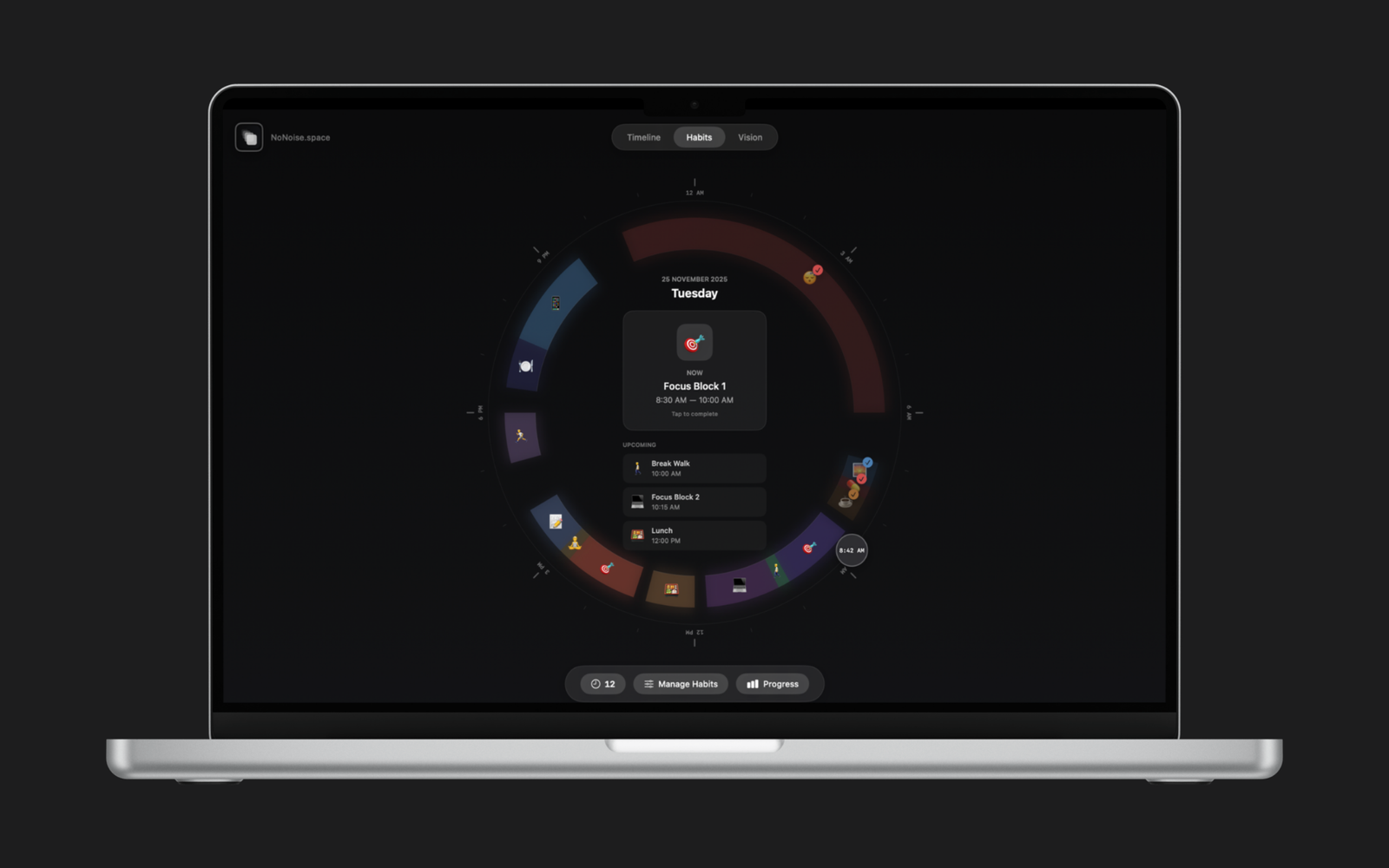
Use a visual tracker (like NoNoise) that shows your entire day, making it easy to see your morning routine in context and adjust for better flow into your work day.
Use NoNoise's visual 24-hour interface to design, track, and optimize your morning habits for peak performance.
Download NoNoise for MacFree morning routine tracker for macOS